
From Tiny Seeds to Thriving Plants: Our Native Seedlings to Stewardship Journey

It started with a handful of seeds and a big question: what does it actually take to grow a native plant from scratch?
Thanks to a grant from MAEOE (Michigan Association for Environmental and Outdoor Education), we've spent the past several months finding out — and the answer has been one of our most meaningful projects yet.
It Begins in the Cold: February Stratification
Long before any green shoots appeared, our project started in February with something that surprised a lot of our young learners: putting seeds in the cold on purpose.
Many native plant seeds require a period of cold, moist conditions before they'll germinate — a process called cold stratification. It mimics what happens naturally over winter, signaling to the seed that spring has arrived and it's safe to sprout. We explored why this process exists, what it means for plants that have evolved alongside our regional climate, and why growing native species matters in the first place.
It was the perfect entry point into a bigger conversation about how plants and ecosystems have been shaped over thousands of years — and how paying attention to those needs is part of what it means to be a good steward.
Into the Tent: Planting in Cells
A few weeks after stratification, it was time to plant. Using supplies provided entirely through the MAEOE grant, we set up a growing tent right inside our forest school room and got to work planting seeds into individual cells.
Watching kids carefully tuck seeds into soil, then check on them day after day, waiting for that first tiny curl of green — there's really nothing like it. The tent became a kind of living science experiment, and the questions that came out of it were wonderful: Why isn't mine sprouting yet? What does the root do first? Do plants get hungry?
Transplant Time: Moving to Bigger Homes
As our seedlings grew, it became clear they were ready for more space. We transplanted them into larger pots — and honestly, by the time we did, they were desperate for the room. Roots were making their way out the bottom, leaves were reaching in every direction. It was a great, tangible lesson in what plants need to thrive.
The seedlings stayed in the tent, carefully tended, until the outdoor weather was finally ready to welcome them.
Building Something Together: The Planter
While we waited for the right planting conditions, we didn't sit still — we built.
Our group planned and constructed a planter together from scratch, drawing on tools and materials skills we'd been building all winter long. Measuring, cutting, assembling — this was hands-on learning that connected directly to our broader curriculum and reminded us that stewardship isn't just about plants. It's about building things that last, and doing it together. We even had a friend from the community center help us plan & build the planter!
Planting Day!
Then came the day we'd been waiting for.
We carried our seedlings outside, filled the planter, and got to work. Little hands pressed roots into soil, spread mulch carefully around each plant, and watered everything in. There was so much pride in that moment — these were their plants, grown from seed, nurtured through cold and warmth and transplant shock, and now finally home.
We talked about pollinators — the bees, butterflies, and other insects that these native plants are specifically designed to support — and why that relationship matters for the whole ecosystem around us. These aren't just pretty plants. They're habitat.
A Community Effort
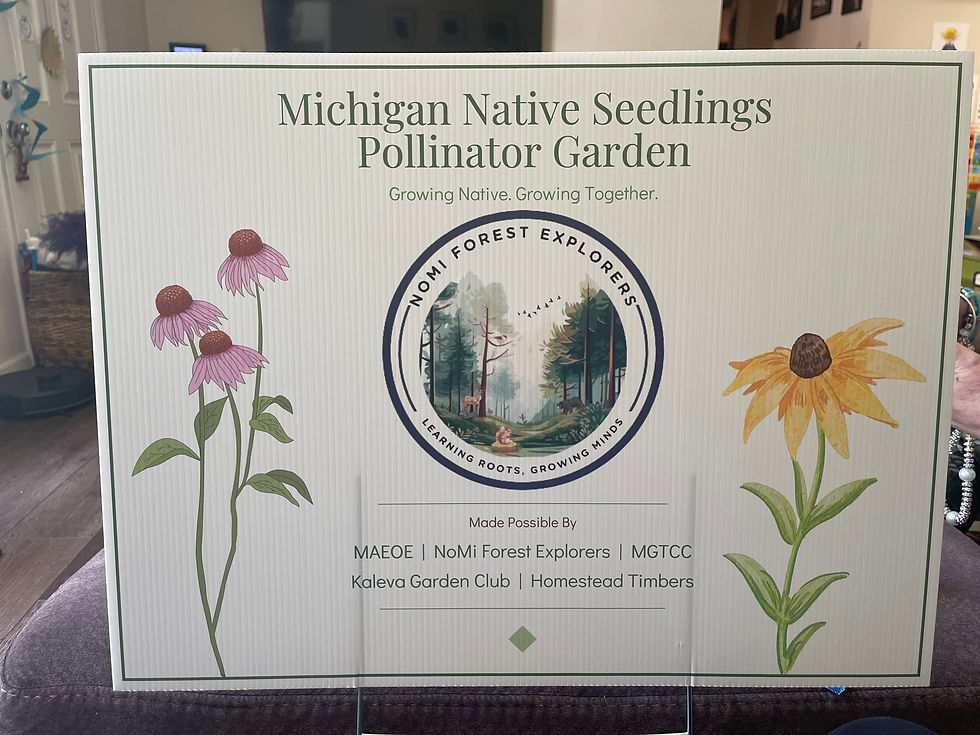
This project was never just ours. It was a true community collaboration, and we're grateful to every partner who made it happen:
MGTCC
Kaleva Garden Club
4-H
NoMi Forest Explorers
Homestead Timbers
Together, we modeled exactly what we hope to grow in our young learners: the understanding that caring for the land is a shared responsibility, and that showing up for it — across generations and organizations — is something worth doing.
What Comes Next
The planter is in the ground, the mulch is laid, and now we wait — and watch.
But the learning isn't done. This fall, we'll be harvesting seeds and plants to learn about seed dispersal and the remarkable ways plants spread themselves across a landscape. And in our kitchen classroom, we'll be making medicine from some of our plants, connecting traditional plant knowledge to the living garden right outside our door.

We can't wait to see these little sprouts transform. Follow along with us — the best is absolutely still to come.
This project was made possible through a grant from MAEOE. Thank you for believing in the power of place-based, community-rooted environmental education.


Comments